Compression Latches
Combine closing with controlled pull-up or compression. They are often considered when a gasket must be compressed or panel movement needs to be controlled.
Access and closure hardware
Enclosure latches and electrical panel locks differ by closing action: some pull the door against a gasket, some turn a cam behind the frame and some draw a lid shut. Choose the action first, then define the door-to-frame interface, operating method and access restriction.
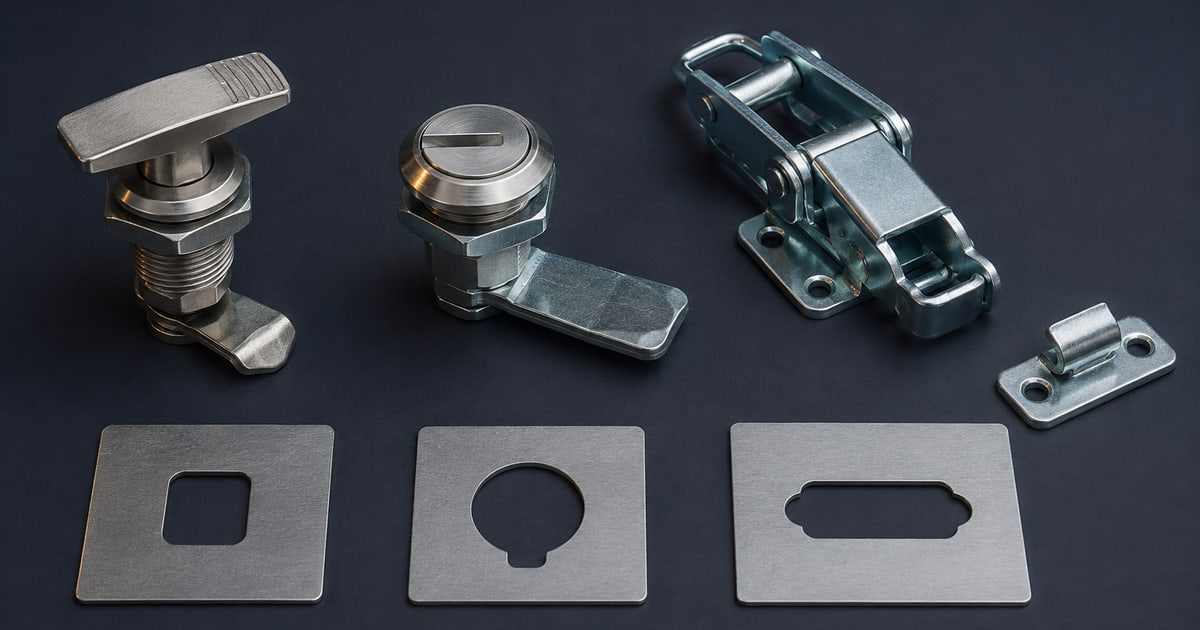
Direct answer
An enclosure latch is closure hardware that holds a door or panel against its frame; a lock adds restricted access. Choose by closing action, door-and-frame geometry, grip, cutout, keeper and any gasket-compression requirement—not by appearance alone. Final suitability depends on the exact installed interface and required evidence.
TW RFQ reviews standard-part and drawing-based latch requests, then identifies manufacturing options that fit the stated interface and commercial requirements. A submitted request starts a sourcing review and does not guarantee a particular model or quotation.
Southco material supports the cited latch-selection inputs, and IEC defines the IP Code scope. TW RFQ combines those narrower concepts into buyer guidance; exact candidate drawings and installed evidence control the decision.
Product families
These families solve different closing and access problems. Begin with the required action rather than choosing by appearance alone.
Combine closing with controlled pull-up or compression. They are often considered when a gasket must be compressed or panel movement needs to be controlled.
Use a short rotary action to move a cam behind the frame. Hand-operated, tool-operated and keyed configurations are separate choices.
Add keyed access restriction to a cam-style closure. Keying requirements should be specified separately from the mechanical fit.
Use an over-center lever action to draw two mating members together. Keeper geometry, mounting planes and closing tension determine fit.
May suit applications that call for slam action or remote actuation. The mating striker, release method and available internal space are critical.
Coordinate more than one closing point on a larger door. Rod travel, handle actuation, guides and frame geometry must be evaluated together.
Detailed buyer guides
Open the specific operating family that matches the application. Each page includes a comparison, installed-interface map, RFQ template and source-linked evidence boundaries.
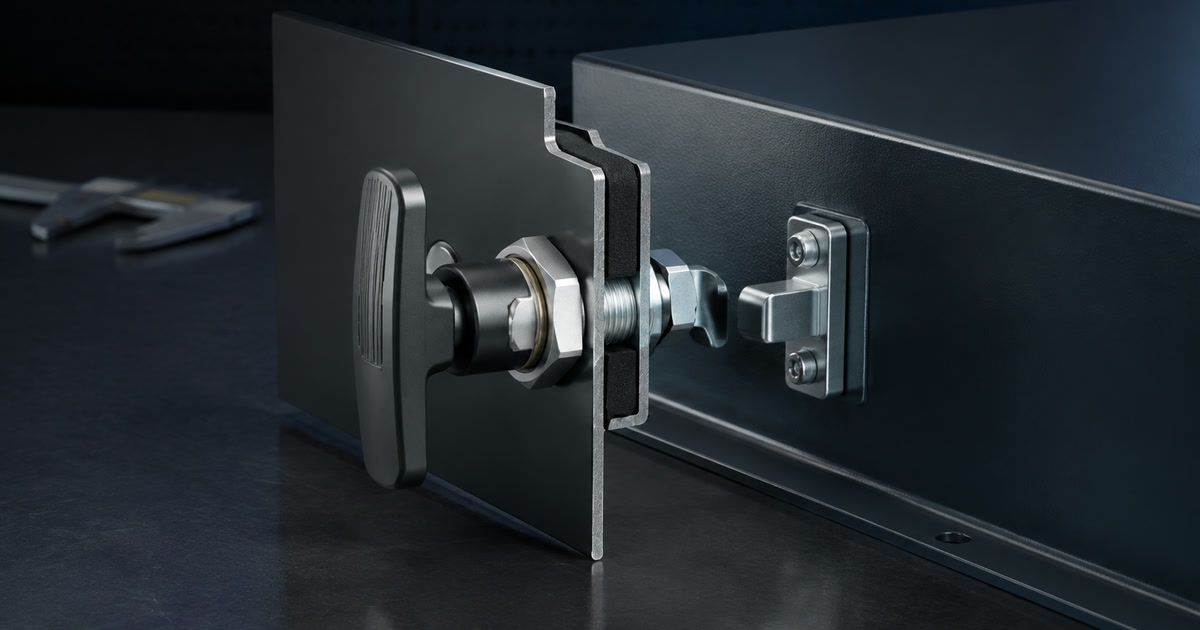
Specify pull-up travel, grip, gasket deflection and installed sealing evidence for compression-latch sourcing.
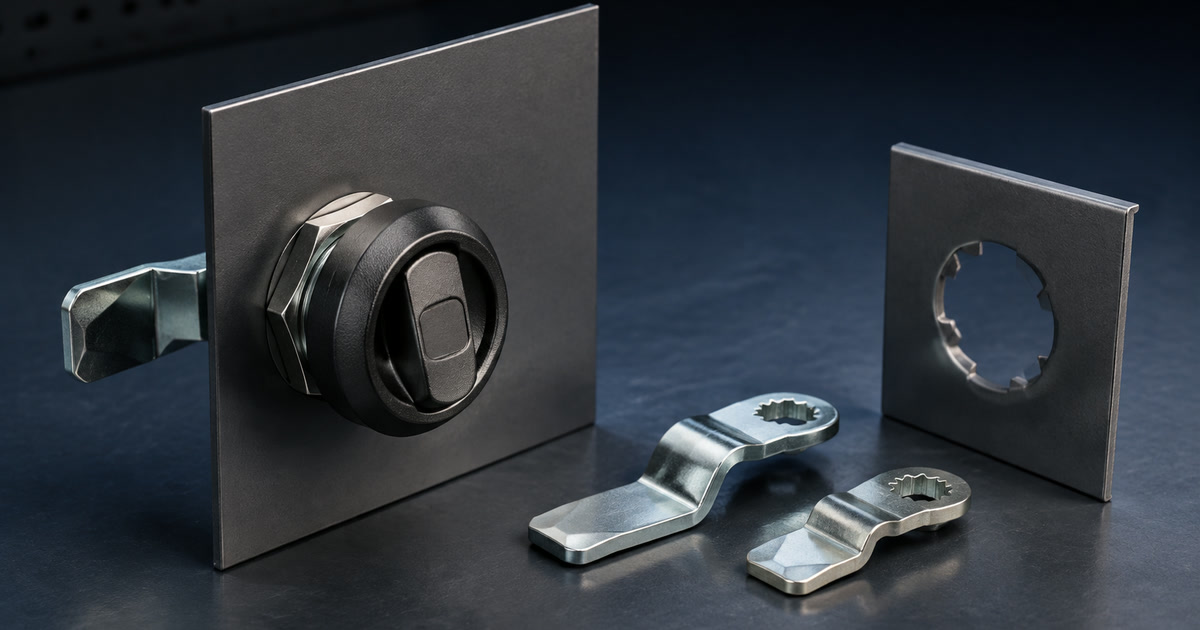
Define grip, cam length and offset, rotation, cutout and access style for quick-access panel latches.
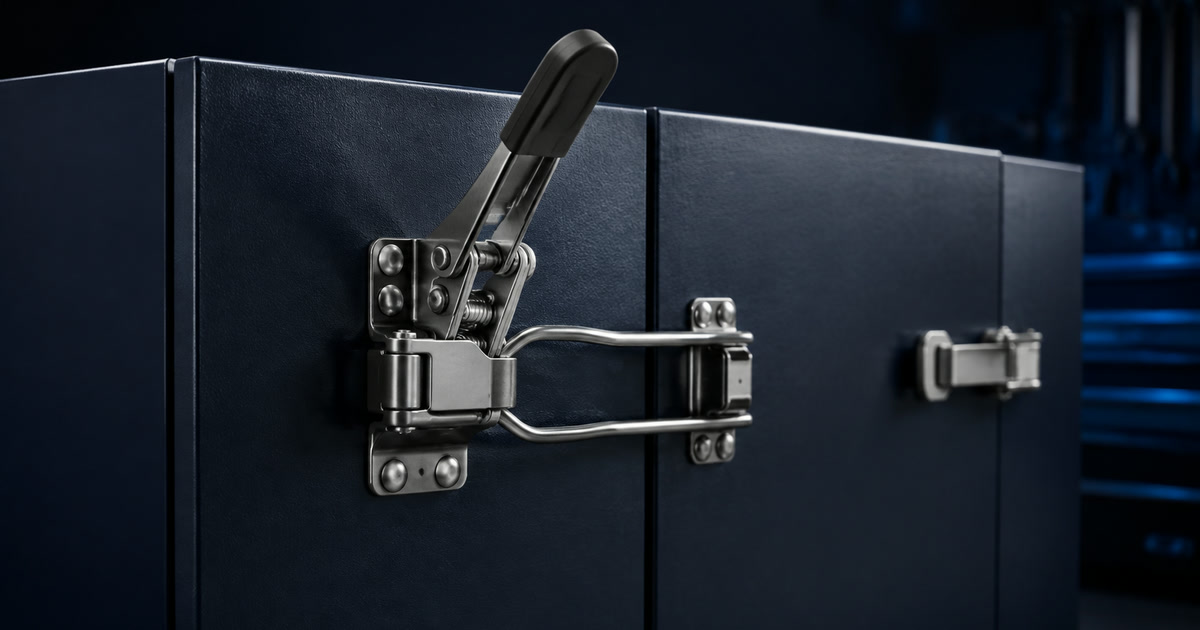
Compare over-center enclosure draw latches by keeper geometry, mounting planes, adjustment, tension and operating sweep.
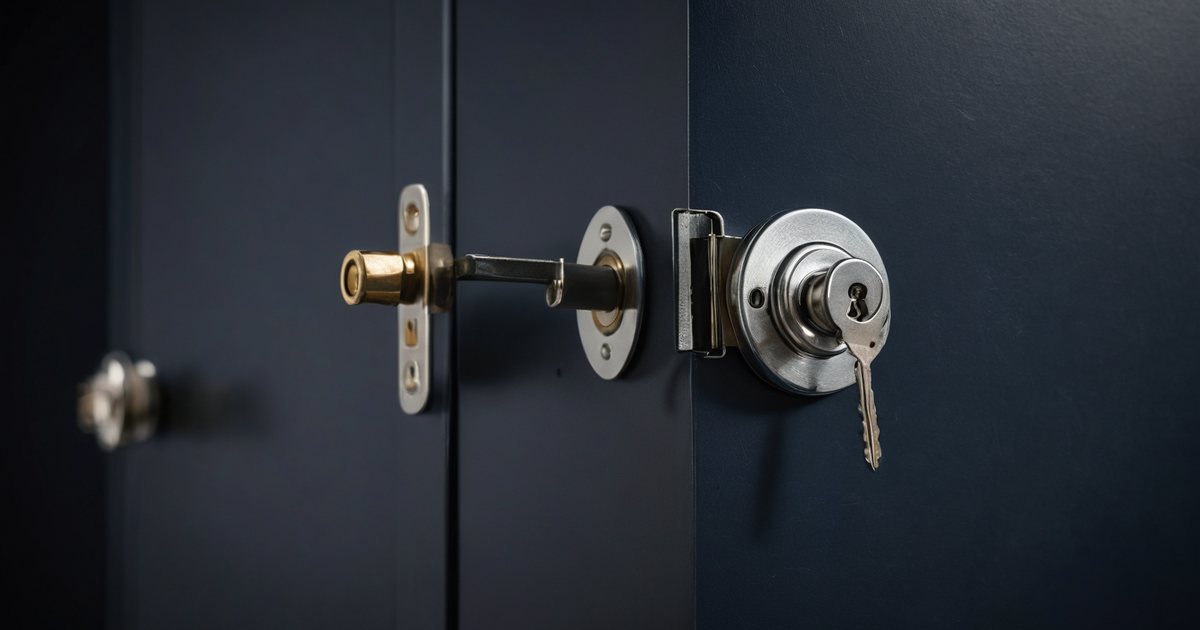
Specify housing length, cam, turn, key removal, cutout and keying for keyed cam locks on cabinets, drawers and utility boxes.
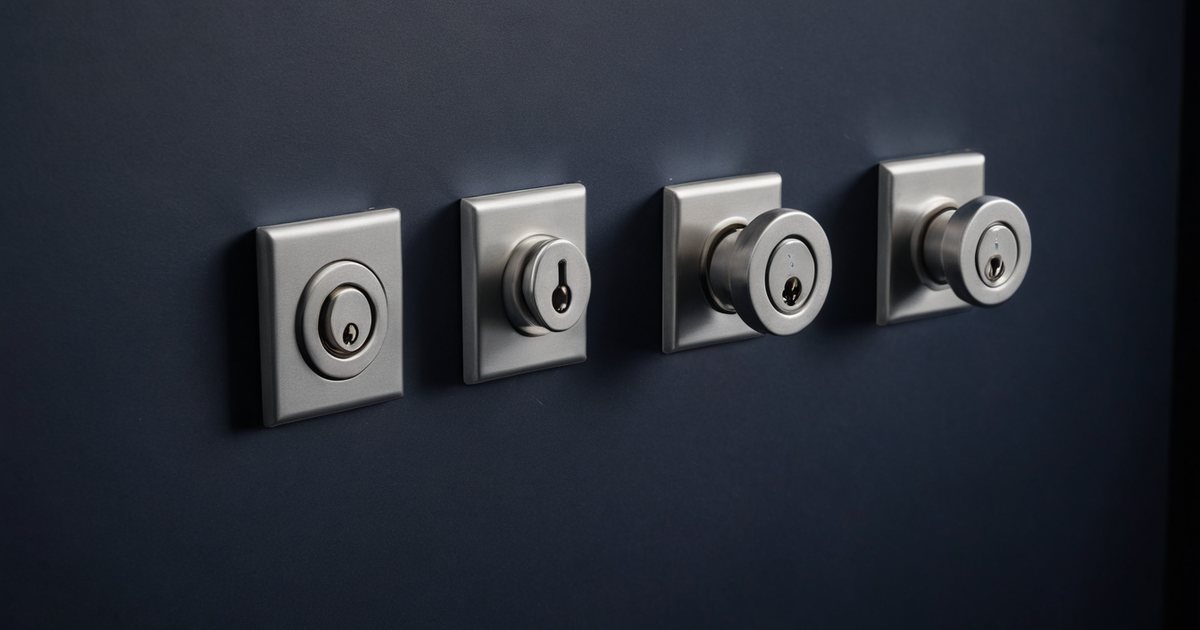
Identify triangle, square and double-bit insert profiles, then specify lock inserts, keyed cylinders and replacement keys.
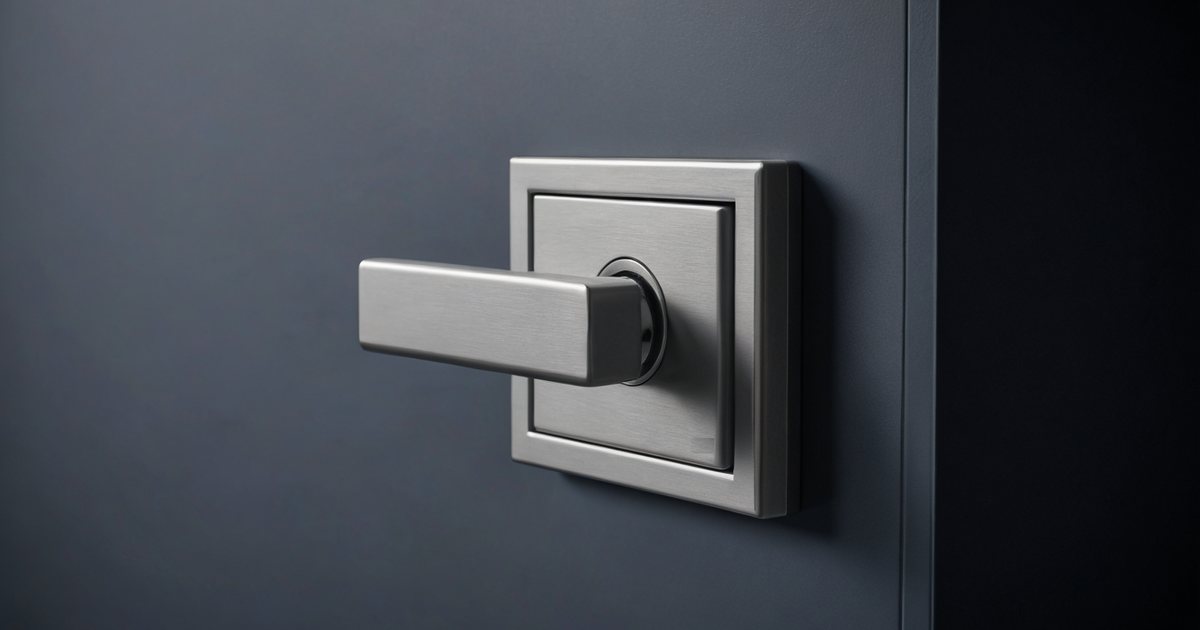
Specify swing handles and multipoint rod systems by door height, locking points, rod stroke, handing, lock insert and sealing evidence.
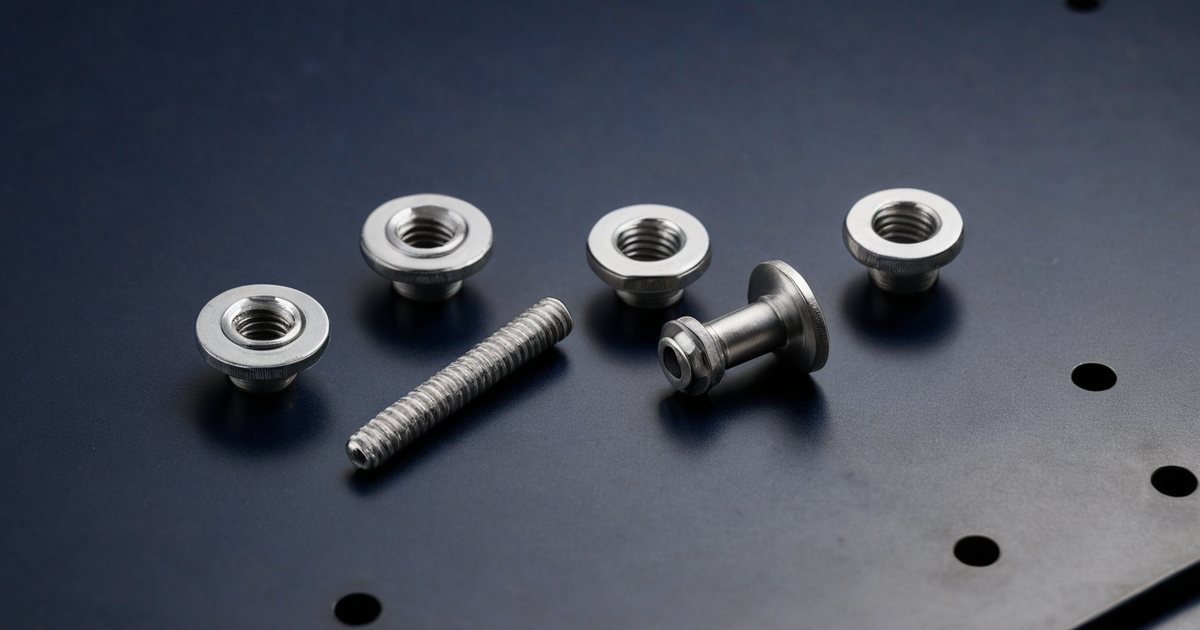
Specify quarter-turn studs, receptacles and captive panel screws by total material thickness, retention, head style and installation method.
Option comparison
A compression latch adds controlled pull-up travel to draw a door toward its frame and may compress a gasket. A basic quarter-turn cam latch mainly rotates a cam behind the frame for quick closure. The selected part still depends on grip, cutout, cam or keeper geometry, seal condition and required evidence.
| Decision factor | Compression latch | Quarter-turn cam latch |
|---|---|---|
| Primary closing action | Rotates or actuates, then adds pull-up or compression travel. | Rotates a cam behind the frame, commonly through about a quarter turn. |
| Typical decision trigger | Controlled draw-in or gasket compression is required. | Fast, simple access and cam engagement are the main needs. |
| RFQ dimensions | Grip, pull-up travel, compression target, cutout and keeper or frame position. | Grip, cam length and offset, rotation, cutout and anti-rotation detail. |
| Evidence boundary | Exact component and installed enclosure configuration still require verification. | A family name or catalog claim does not establish completed-enclosure performance. |
Selection factors
A reference photo can start the discussion, but the door and frame interface usually determines whether a latch can be evaluated accurately.
| Factor | What to specify |
|---|---|
| Door and frame geometry | Show whether the mating surfaces are coplanar, offset or perpendicular, including the closed-door cross-section. |
| Panel and grip dimensions | State panel thickness, frame thickness, door gap, grip dimension or range and available internal clearance. |
| Mounting interface | Provide the cutout, hole pattern, mounting method and cam or keeper location. |
| Closing action | Define pull-up travel or gasket compression where applicable, plus the required closing tension or adjustment. |
| Access method | Choose hand, tool, key or padlock operation and state keying, handing and rotation-direction requirements. |
| Environment and evidence | Specify material and finish plus relevant exposure and any exact test or enclosure-system evidence required. |
Practical answer
Most electrical cabinets use one of three closing actions. A compression latch turns and then pulls the door against its gasket; a quarter-turn cam latch rotates a cam behind the frame without that controlled pull-up; a draw or toggle latch pulls a lid or door toward a keeper with an over-center lever. Each can be hand-, tool- or key-operated, so choose the closing action first and the access method second.
Application decision
Start with the door behavior and access method. The final part still has to be checked against the exact cutout, grip and keeper interface.
| Application need | RFQ direction |
|---|---|
| Controlled gasket compression | Begin by evaluating a compression-latch family and define pull-up travel, compression target and the installed seal condition. |
| Simple frequent access | Compare quarter-turn cam arrangements, then specify grip, cam offset, rotation, head style and anti-rotation features. |
| Restricted access | Define the mechanical closure first, then add keying, tool access or padlock requirements as a separate decision. |
| Draw two mating members together | Evaluate draw or over-center latch geometry using the keeper position, mounting planes and required closing tension. |
| Remote or slam action | Map the striker, release method, cable or linkage travel and available internal clearance before selecting a rotary system. |
| Large door with several closing points | Treat the handle, rods, guides, latches and frame as one multipoint system rather than independent components. |
Installed interface
Follow the load and motion from the operator to the frame. Each interface can eliminate an otherwise similar-looking candidate.
Hand, tool, key or padlock access plus rotation direction and available exterior space.
Panel thickness, hole or cutout, anti-rotation feature and mounting method.
Installation depth, actuation travel, material, finish and internal clearance.
Grip, offset, engagement depth, adjustment and closed position relative to the frame.
Door gap, frame stiffness, seal location, compression condition and latch spacing.
Typical use
The same hardware family can behave differently across enclosure types. Include the installed context, not only the component name.
Access doors and removable panels that require repeatable closing and a defined operating method.
Machine guards, service panels and equipment housings with application-specific access requirements.
Panels and doors where the frame geometry, service environment and maintenance access are defined.
Case closures that must match the lid, keeper position, mounting surface and intended handling conditions.
Technical boundaries
Use measurable requirements and identify the requested test basis. Product-family names alone do not establish performance or certification.
Buyer questions
Use these answers to prepare a more specific sourcing request.
Fixed grip fits one verified closed stack-up; adjustable grip covers a defined range, with its setting and locking method specified. The fixed-grip vs adjustable-grip comparison shows what each needs in the RFQ.
Yes. Include the reference part number, photos and the complete mounting interface. Equivalence must be checked against dimensions, operation, material, finish and any required evidence rather than appearance alone.
A latch provides the mechanical closing function. A lock adds a method of restricting access, such as a keyed cylinder. Some assemblies combine both functions.
The exact latch, cutout, panel thickness, seal, fasteners, mounting torque, orientation, cam or keeper engagement and latch spacing can affect the supported configuration. State these details and ask whether the available evidence covers the completed installation—not merely the component family.
Technical reference basis
This category guide supports RFQ preparation. It does not replace an exact supplier drawing, model data, test report, applicable standard or responsible engineering approval.
Original manufacturer guidance illustrating why compression, grip, space and environment are part-specific inputs.
Original product-family material showing distinct actuation, cam, grip and access options.
Manufacturer overview of draw-latch families used to pull closure members together.
Official scope for the IP Code referenced when an enclosure protection requirement is specified.
Private sourcing review
Have a drawing, photo or reference part?
Send the interface and commercial requirements for a focused Taiwan sourcing review.