Concealed Hinges
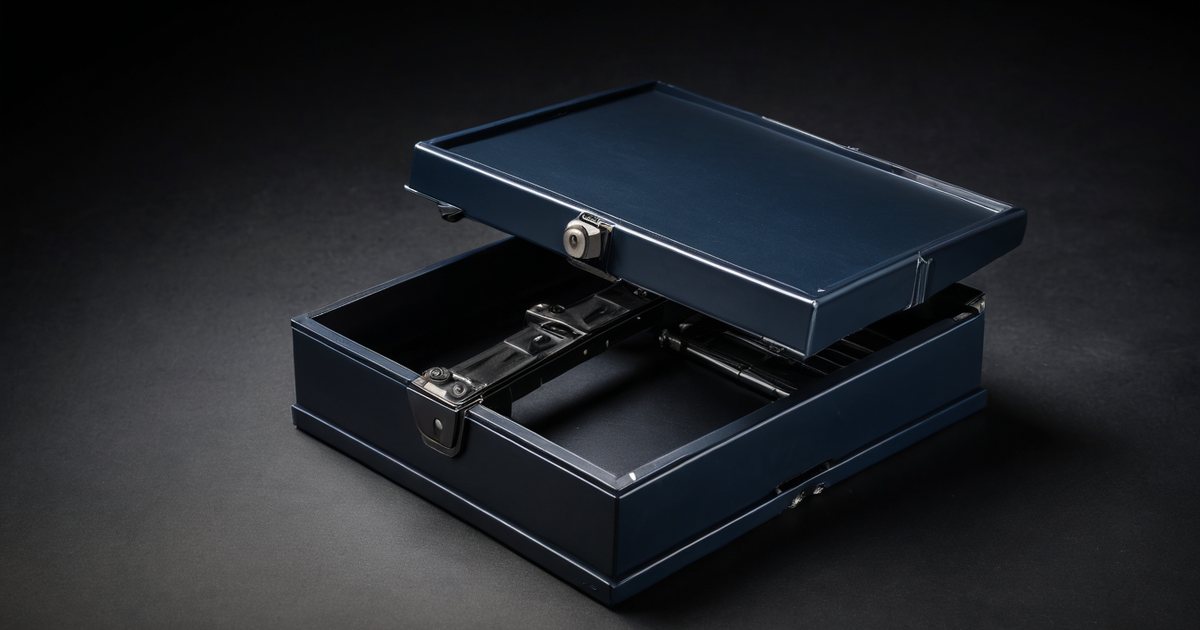
Locate most hinge hardware inside the enclosure for a clean exterior and reduced external projection. Internal clearance remains essential.
Door motion and positioning
Electrical cabinet and enclosure hinges (concealed, lift-off, continuous and positioning types) define how a door moves, aligns, comes off and holds position. Selection starts with the door geometry and load case, then mounting, access and environment.
Direct answer
The correct enclosure hinge depends on door mass and center of gravity, hinge spacing and orientation, opening or removal path, mounting interface, external loads and required positioning behavior. Door height or mass alone cannot determine hinge quantity or capacity; suppliers need the complete installed load case.
TW RFQ can review a reference hinge, a new enclosure interface or a drawing-based requirement. Hinge selection must be based on the complete door and frame arrangement rather than door mass alone.
The cited manufacturer guidance supports torque and installed-geometry considerations. TW RFQ synthesizes the complete RFQ input list; a responsible engineer and exact candidate data must establish final load suitability.
Product families
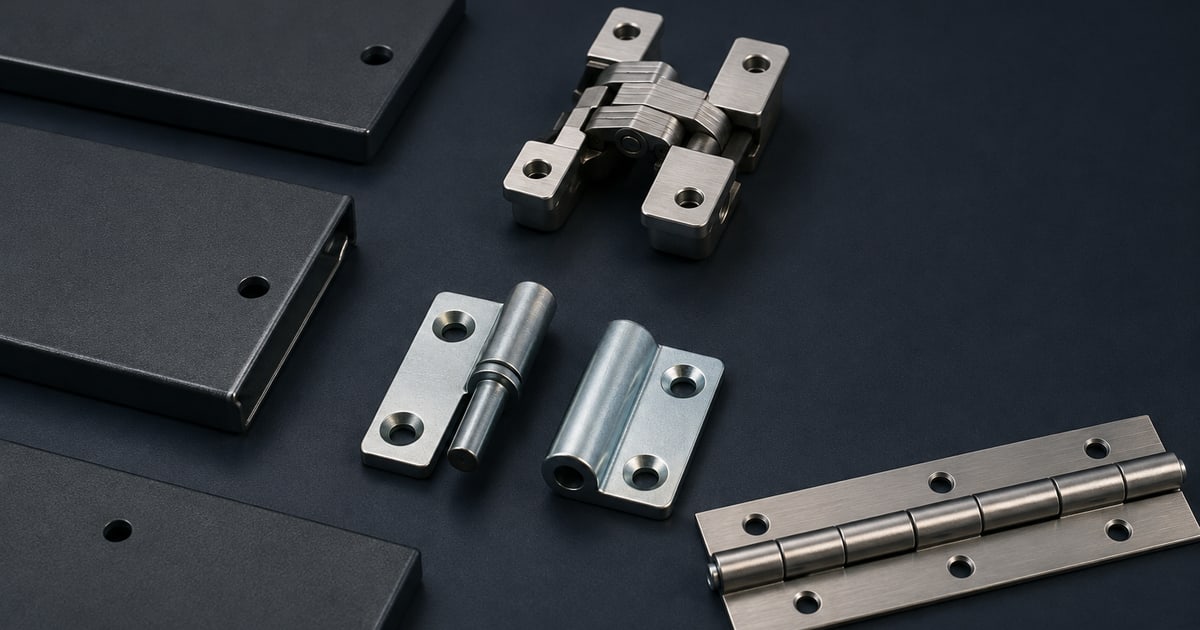
Different hinge families change the exterior profile, removal process and door-positioning behavior.
Locate most hinge hardware inside the enclosure for a clean exterior and reduced external projection. Internal clearance remains essential.
Allow removal in a defined direction when the installation provides enough clearance. Captive-pin and tool-assisted designs are distinct.
Provide a direct pivot at the panel surface. Leaf geometry, fastener pattern, offset and surrounding clearance define the interface.
Resist motion and may hold a door at selected positions when the specified torque and application geometry support that behavior.
Provide defined stopping positions rather than continuous position control. Required angles and release behavior should be stated.
Extend along a larger portion of the door edge. Attachment layout, straightness, alignment and the actual load case still require review.
Detailed buyer guides
Open the specific operating family that matches the application. Each page includes a comparison, installed-interface map, RFQ template and source-linked evidence boundaries.
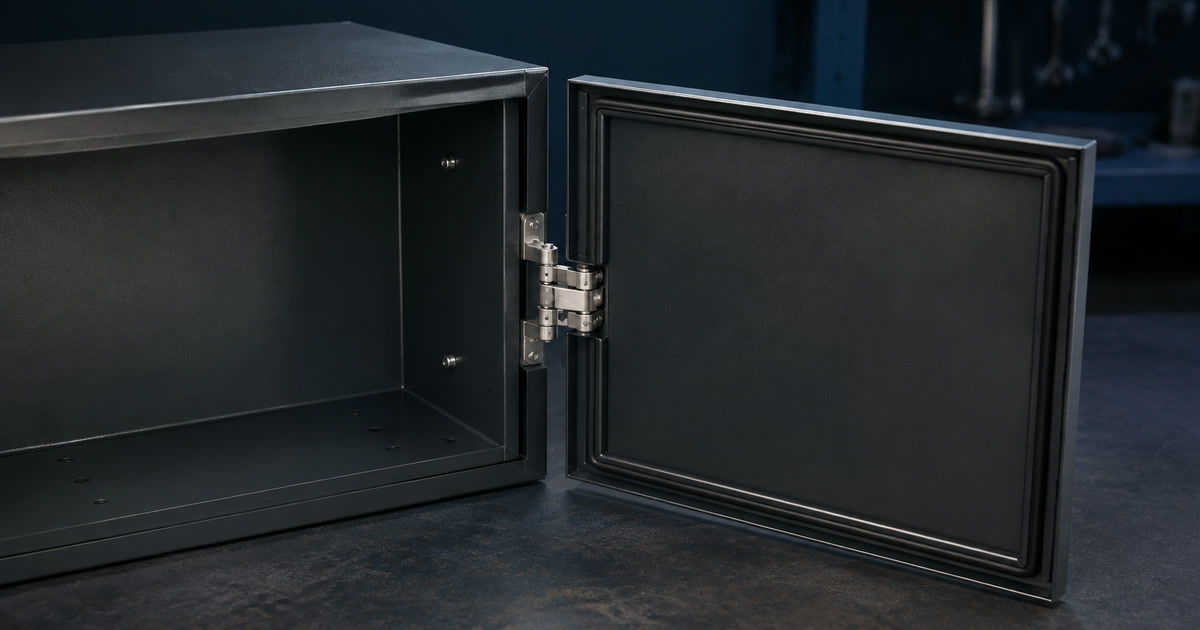
Control door return, pivot offset, opening path, internal clearance and installed load for hidden enclosure hinges.
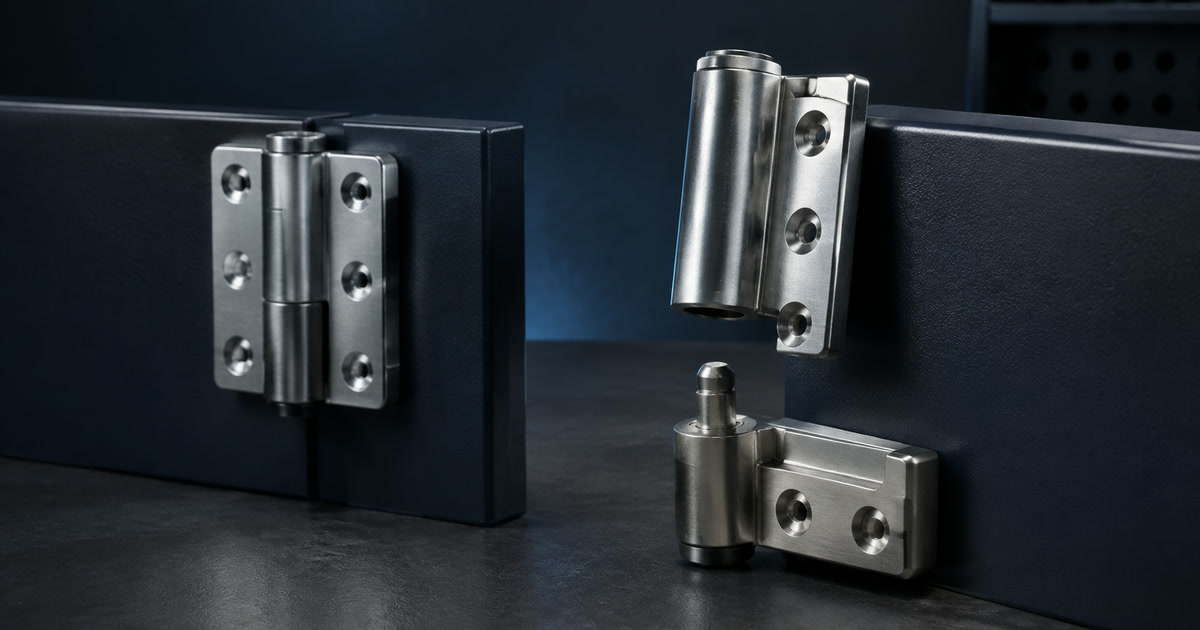
Specify removable-door hinges by handing, disengagement travel, lift clearance, retention and the full installed load case.
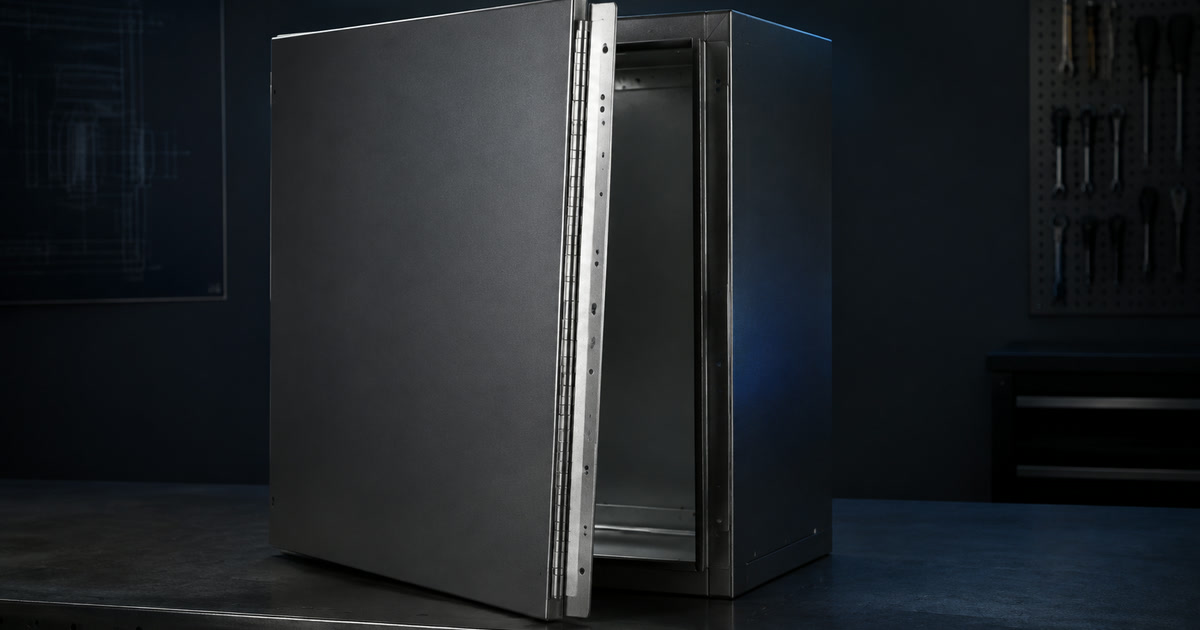
Specify piano-style hinges by finished length, leaf and pin geometry, hole pattern, offset, material and door load.
Size constant-torque hinges from lid moment, tolerance and life, and compare them with lid stays and gas springs.
Option comparison
Use a concealed hinge when the exterior should remain clean and internal sweep is available; a lift-off hinge when the door must be removed in a defined direction; and a continuous hinge when attachment or alignment is distributed along an edge. Load case, mounting and service access still control the final choice.
| Decision factor | Concealed hinge | Lift-off hinge | Continuous hinge |
|---|---|---|---|
| Main advantage | Hidden exterior and protected hinge location. | Door removal without removing every fastener. | Distributed attachment along a long edge. |
| Critical clearance | Internal sweep and mounting access. | Lift-off direction and removal space. | Full-edge alignment and opening sweep. |
| Key RFQ inputs | Door/frame section, opening angle, interference and attachment. | Handing, pin orientation, removal direction, load and clearance. | Length, axis, fastener spacing, straightness and panel stiffness. |
| Common mistake | Ignoring internal interference. | Leaving handing or removal direction undefined. | Assuming length alone establishes load capacity. |
Selection factors
Door mass is only one input. Include the center of gravity, orientation, hinge spacing and any external forces.
| Factor | What to specify |
|---|---|
| Door and frame interface | Show door thickness, overlay or inset arrangement, gap, offset, seal location and the motion path. |
| Load case | State door mass, dimensions, center of gravity, hinge count and spacing, orientation and external forces. |
| Motion and access | Define opening angle, projection limits, handing, pin orientation, removal direction and service clearance. |
| Mounting | Identify surface, concealed, weld-on, stud, screw, rivet or another mounting method and rear access. |
| Positioning behavior | Specify free-swing, torque range, detent angles or spring assistance only when required. |
| Durability evidence | Define material, finish, exposure and any load, cycle, shock or vibration acceptance method. |
Practical answer
Specify the moving panel’s mass, center-of-gravity distance from the hinge axis, hinge orientation and quantity, direction of motion, desired hold or operating behavior and external forces. There is no safe universal torque value from panel weight alone; the responsible engineer and candidate supplier must verify the complete installed geometry and operating conditions.
Application decision
Door mass is not a complete hinge specification. Position, center of gravity, direction of motion and external loads change the required behavior.
| Application need | RFQ direction |
|---|---|
| Clean exterior | Compare concealed hinges only after confirming internal sweep, mounting access and interference through the full opening angle. |
| Door removal without fastener removal | Evaluate lift-off direction, handing, pin orientation and the vertical or horizontal clearance available during service. |
| Hold a panel at many positions | Define torque direction and range using panel weight, center of gravity and motion; do not select from weight alone. |
| Stop at specific angles | Compare detent positions, release force and opening direction instead of assuming continuous position control. |
| Distribute attachment along an edge | Review a continuous hinge with alignment, straightness, fastener spacing and door/frame stiffness included. |
| High external or dynamic load | Provide the complete load case and acceptance method; a “heavy-duty” label is not measurable evidence. |
Installed interface
Describe the physical system around the hinge axis so the candidate can check both movement and attachment.
Mass, dimensions, center of gravity, attached equipment and stiffness.
Quantity, spacing, axis, handing, orientation and intended load direction.
Opening angle, sweep, removal direction, free-swing, torque or detent behavior.
Panel thickness, hole pattern, fasteners, studs, welds and rear access.
Cycle expectation, external forces, exposure, finish and required verification.
Typical use
The same hardware family can behave differently across enclosure types. Include the installed context, not only the component name.
Overlay or inset doors requiring a defined swing path, access angle and mounting interface.
Access points where removal, positioning and clearance must fit the maintenance procedure.
Doors and panels with defined load, opening frequency and surrounding equipment constraints.
Case lids or doors where hinge projection, opening angle and attachment strength must be evaluated.
Technical boundaries
Use measurable requirements and identify the requested test basis. Product-family names alone do not establish performance or certification.
Buyer questions
Use these answers to prepare a more specific sourcing request.
A free-swing hinge mainly guides motion, a detent hinge indexes at defined positions, and a positioning or constant-torque hinge resists movement through a stated range. Define the required behavior, direction, operating force and load case instead of treating these functions as interchangeable.
The answer depends on the door mass, center of gravity, orientation, hinge spacing, expected external loads and the selected hinge data. Include the complete load case rather than specifying quantity from door height alone.
Show the door and frame panel thicknesses, mounting faces, hole pattern, fastener or stud details, thread engagement, weld requirements, rear access and any reinforcement. The hinge, attachment and supporting panels must be evaluated as one installed load path.
Only in the handing it was made for, or if the design is reversible. Show the required side and removal clearance in the drawing; see how to document lift-off hinge handing.
Technical reference basis
This category guide supports RFQ preparation. It does not replace an exact supplier drawing, model data, test report, applicable standard or responsible engineering approval.
Original manufacturer guidance discussing weight, center of gravity and direction of movement for torque selection.
Original manufacturer taxonomy for concealed, removable, positioning and related hinge families.
Private sourcing review
Have a drawing, photo or reference part?
Send the interface and commercial requirements for a focused Taiwan sourcing review.