Keyed cabinet access

Cabinet Cam Locks for Doors, Drawers and Access Panels

Cabinet cam locks are keyed cylinder locks that turn a flat or cranked cam behind a frame or strike on cabinet doors, drawers, lockers and utility boxes. Replacing one, or choosing one for a new design, depends on a few measurements and a keying plan, not on how the key face looks. Doors that must seal against a gasket need an enclosure latch instead.

By ·

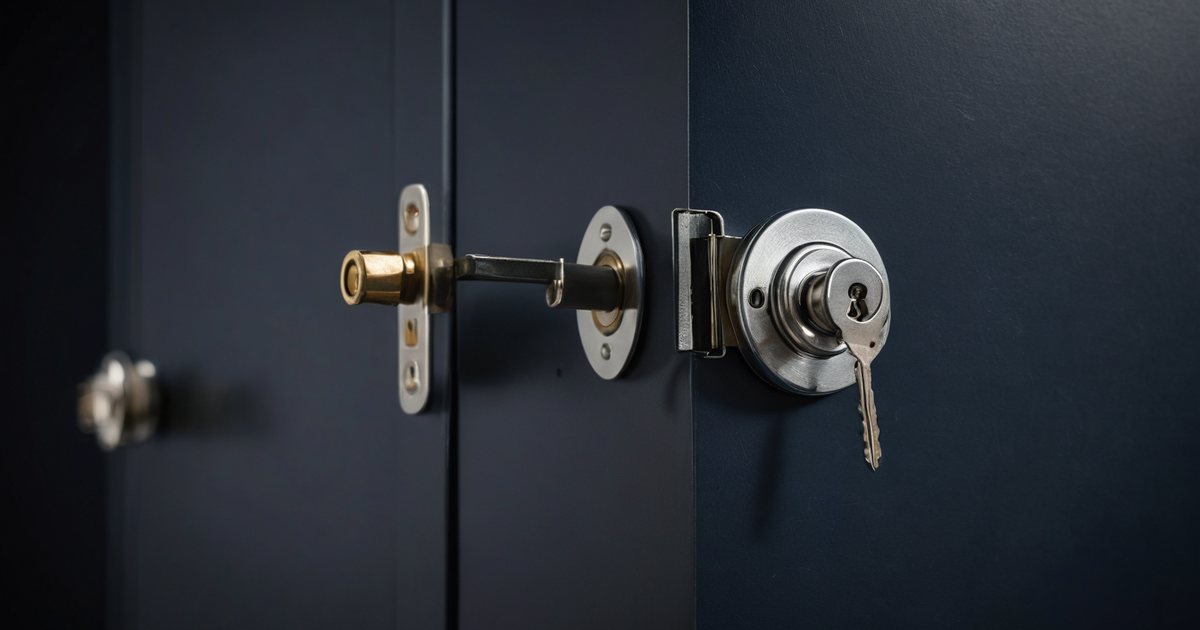
Generic keyed cam lock with its key inserted near the edge of a dark metal cabinet door, beside a second lock body and cam arm
Editorial illustration of keyed cam locks on a cabinet door. It is not a supplier model or statement of availability.

Direct answer

What is a cabinet cam lock, and what does a supplier need to quote one?

A cabinet cam lock is a keyed cylinder that passes through a door, drawer front or panel, is usually held from behind by a nut or clip, and turns a flat or cranked cam behind the frame or a strike. To quote it, a supplier needs the housing length and panel stack, the cam’s length and offset, the turn and key-removal positions, the cutout and the keying plan. Sizes vary widely: CompX National’s 2020 catalog lists disc-tumbler cam locks with cylinder lengths from 7/16 in to 2 in.

  • Measure the housing and panel stack; each maker sets its own panel limit.
  • Define the cam by length from the lock center, offset and locked position.
  • State the turn and key-free positions from the key face, plus the keying plan.
Sources for this answer:

Evidence at a glance

What Cam-Lock Keying, Grade and Size Claims Establish

Will keyed-alike replacement locks open with the keys already in use?

Only if the order names the existing key system. Keyed alike means every lock in the order shares one key number; it does not reproduce a code, key blank or keyway already in service unless the supplier is asked to match it.

Boundary: A keyed-alike label does not identify a key system: CompX National stocks a short list of keyed-alike codes per lock, and Hudson Lock makes its ULR series to carry other makers’ key blanks and codes.

Buyer action: State the original maker, the key blank or keyway and the code stamped on the key or lock face, then try a current key during sample approval.

What does an ANSI/BHMA A156.11 grade establish for a cam lock?

It shows that the certified model passed the A156.11 tests for its grade and lock type. BHMA lists cam locks among the cabinet locks the standard covers and describes Grade 1 durability as 40,000 cycles, usually by key and cylinder.

Boundary: BHMA notes that test applicability varies by lock type, and a grade covers the certified model, not a different housing length, cam or uncertified lookalike.

Buyer action: If grading matters, name A156.11, the grade and the lock type in the RFQ, and ask for the certification listing that shows the exact part number quoted.

Primary sources:

Does housing length alone tell me the maximum panel thickness?

No. Each maker publishes its own limit, and the allowance is not constant. Euro-Locks lists 7.2, 12 and 21 mm nut-fixing limits for 17.7, 22.3 and 30 mm housings in one camlock family, while CompX National pairs its 15/16 in cylinders with a 5/8 in maximum but its 5/8 in disc-tumbler cylinder with 15/64 in.

Boundary: The figures apply only to those models and fixings; clip and snap-in housings have their own narrow ranges, and catalogs name the length differently.

Buyer action: Give the full panel stack, including any frame, spacer or washer, and ask the supplier to confirm the maximum panel thickness for the exact housing and fixing offered.

Option comparison

Keyed alike vs keyed different cam locks: which should I order?

Order keyed alike when one key should open every lock in a group, and keyed different when each lock needs its own key. Master keying adds one key over keyed-different locks, but Euro-Locks supplies it only to order and on some series limits it to certain movements and fewer combinations. State key numbers and keys per lock either way.

Keyed alike vs keyed different cam locks: which should I order?
Decision factorKeyed alikeKeyed different
What one key opensEvery lock in the keyed-alike group.Only the lock it was supplied with.
Typical fitBoxes or doors one team services with one key.Lockers or drawers assigned to different users.
RFQ must stateLocks per key number and any existing code to match.Number of different keys, keys per lock and any master key.
Common mistakeAssuming a new keyed-alike set matches keys already in use.Ordering without a plan for spare keys and code records.
Decision basis: TW RFQ comparison based on keying terms in the Euro-Locks and CompX National catalogs. Available codes, differ counts and master-key options depend on the key series offered.

Configurations to compare

Nut-Fixed Threaded Housing

The common form: the housing passes through the cutout and a nut clamps it from behind. The panel limit rises with housing length but differs by model.

Clip or Snap-In Housing

A horseshoe clip in a milled groove, or a snap-in body, holds the lock in thin sheet. Euro-Locks cuts clip grooves for bands such as 0.82–1.22 mm, so state the exact plate thickness.

Field-Configurable Replacement

Replacement ranges such as Hudson Lock’s ULR series (11/32 to 1-3/4 in) ship with parts to set a 90- or 180-degree turn, restricted key pull and a straight or offset cam.

Tool- or Coin-Operated

A square or triangle drive, screwdriver slot or coin slot replaces the key cylinder where only casual access needs restricting; Euro-Locks supplies the tool key only to order.

Shuttered or Covered Keyway

A keyway shutter or separate dust cover protects the cylinder in dirty or outdoor boxes. It is a lock feature, not an enclosure rating.

Selection factors

What to Measure and State for a Cam Lock Quote

Cabinet Cam Locks RFQ selection factors
FactorWhat to specify
Housing length and panel stackMeasure the housing and every layer it passes through, then confirm the maker’s maximum panel thickness for that length and fixing.
Cutout shapeGive the hole shape and size and the panel material. CompX National, for example, uses a double-D hole in metal but a 3/4 in round hole in wood.
Fixing methodState nut, horseshoe-clip or snap-in fixing; clip and snap-in housings each fit only a narrow thickness band.
Cam geometryDimension working length from the lock center, crank offset and direction, thickness and the clock position when locked.
Turn and key removalState a 90- or 180-degree turn, the unlocking direction seen from the key face and every key-free position.
Keying planChoose keyed different, keyed alike or master keyed, and give key numbers, keys per lock and any code to match.
Cylinder, finish and exposureName the cylinder or tool drive, the exposed finish and the location, and ask what the barrel, housing and cam are made of.

Installed interface

  1. 01

    Key face

    Cylinder type, key code, keying plan, key-free positions and any shutter or dust cover.

  2. 02

    Head and cutout

    Head shape, hole shape and size, and the flats or notches that stop rotation.

  3. 03

    Housing and fixing

    Housing length, panel stack, and nut, horseshoe-clip or snap-in fixing with any washer.

  4. 04

    Cam

    Length from the lock center, crank offset and direction, thickness and locked position.

  5. 05

    Frame or strike

    The surface the cam bears on, its overlap and clearance through the full turn.

Practical answer

How do I measure a cam lock for replacement?

Remove the lock and measure it beside the panel it came from. Record the panel stack, the housing length and dimension X (underside of the head to the inside face of the cam), the cam’s working length from the lock center and any crank, the locked cam position and turn seen from the key face, where the key comes out, and the cutout and fixing. Say whether the direction you give locks or unlocks, because catalogs use both. Where the lock is part of an approved design, also complete an equivalent-part evaluation.

  1. Measure the full panel stack, then the housing length and dimension X from the underside of the head.
  2. Measure the cam from the lock center to its tip, plus any crank offset and whether it bends toward or away from the head.
  3. Facing the key, record the locked cam position, the 90- or 180-degree turn, the unlocking direction and every position where the key comes out.
  4. Record the cutout shape (double-D, notched round or chamfered square) with its diameter and across-flats size, and whether a nut, horseshoe clip or snap-in body holds the lock.
  5. Photograph the key face, copy any key code, and state keyed alike, keyed different or master keyed.

Copy into your request

Cabinet Cam Locks RFQ template

Photos of the key face, housing and cam: [ ]
Housing length, head-to-cam distance and panel stack: [ ]
Cutout shape, size and fixing method: [ ]
Cam length, crank offset and direction: [ ]
Cam position when locked: [ ]
Turn angle, direction and key-free positions: [ ]
Cylinder type or tool drive: [ ]
Keying plan, key code and keys per lock: [ ]
Finish, exposure and order quantities: [ ]

Application decision

Choosing a Cam Lock for Replacement, Thin Panels or Shared Keys

Choosing a Cam Lock for Replacement, Thin Panels or Shared Keys
Application conditionRFQ direction
Like-for-like replacementSend the removed lock’s measurements, photos and key code, and match housing, cam, turn, cutout and keyway before comparing price.
New cabinet or panel designChoose the lock family first, then draw the cutout, panel stack and frame or strike to that maker’s drawing.
Thin sheet-metal doorCompare clip or snap-in housings, each limited to a narrow plate-thickness band, with a nut-fixed housing.
Door that must sealSpecify an enclosure quarter-turn or compression latch instead of a cabinet cam lock.
Many users or shared accessFix the keying plan first; master systems can restrict movements and available key combinations.

Applications to describe in the RFQ

01

Utility and Electrical Boxes

State the panel stack, keying across sites and whether a keyway shutter or dust cover is needed.

02

Metal Cabinets and Drawers

Define flush, lipped or overlay construction, the cam shape and the frame edge or strike the cam meets.

03

Lockers and Staff Storage

Plan keyed-different locks, any master key, spare keys and how key numbers are recorded.

04

Equipment Service Panels

Show the frame the cam bears on, and confirm the panel does not need a sealed, gasketed latch.

Buyer questions

Cabinet Cam Locks FAQ

Answers without a listed source are TW RFQ editorial guidance, not an external standard or part-specific approval.

When should I use an enclosure latch instead of a cabinet cam lock?

Use one when the door must compress a gasket, needs a controlled grip against the frame or has to support an enclosure rating. Those needs are specified differently from a cabinet cam lock’s housing length and cam, so start from the quarter-turn cam latch inputs or the compression latch inputs.

Can one cam lock be set for a 90- or 180-degree turn?

Some can. Several CompX National cam locks use stop washers to give either turn, and Hudson Lock ships its ULR replacement locks with parts for 90- or 180-degree rotation. Others are built to one movement code, so state the turn and key-free positions you need rather than planning a conversion.

What does “key removable in locked position only” mean?

The key can be withdrawn only after the cam is turned to locked, so the lock cannot be left unlocked once the key is out. CompX National uses this operation on its mailbox locks, while its cylinder cam locks release the key in both positions. State every key-free position you need.

Why does a cam lock often come with more than one cam?

So one lock can suit different fronts. CompX National packs two cams with its disc-tumbler cam locks, straight for lipped or overlay construction and formed for flush construction, and gives its pin-tumbler cam locks an alternate cam for the opposite turn. Fit the cam that matches your section and record its length and offset.

Technical reference basis

Sources

What these buyer guides do not establish

Sources last checked: .

Private sourcing review

Have a drawing, photo or reference part?

Send the interface and commercial requirements for a focused Taiwan sourcing review.

Request a Quote