Tool and key access

Electrical Cabinet Key Types and Insert Profiles

Electrical cabinet key types come in two broad groups: profile tools that turn a tool-operated insert—triangle, square, double-bit, slot or hexagon—and cut keys that turn a keyed cylinder. Identify the group, then the exact profile, size and form, before ordering a lock, an insert or spare keys.

By ·

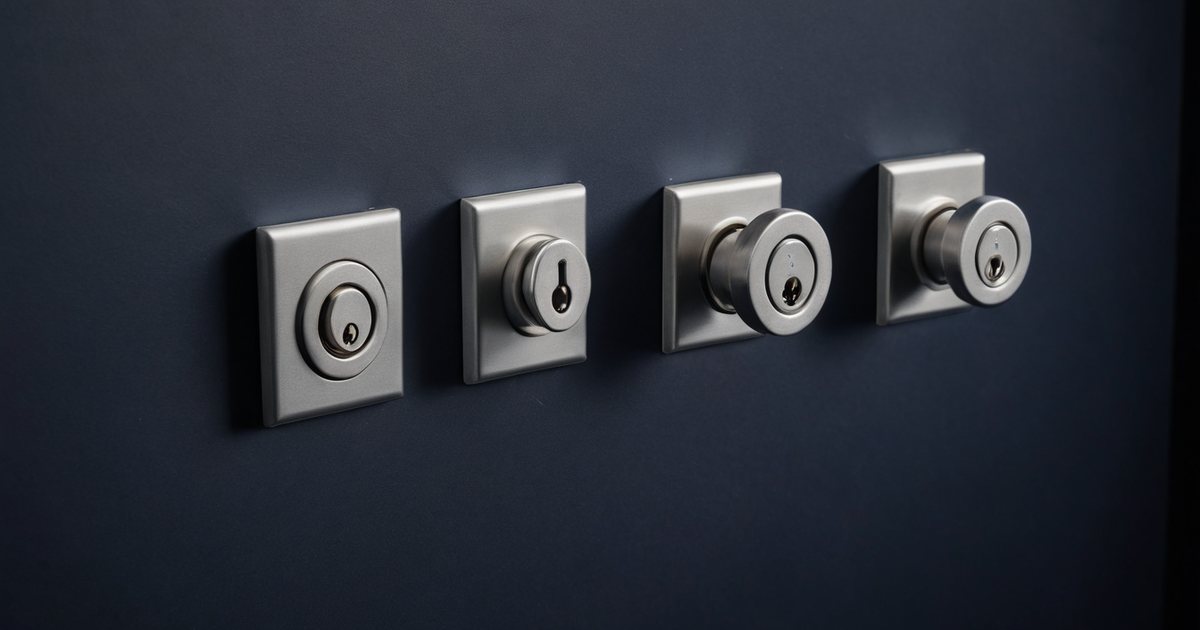
Generic cabinet locks with different key faces mounted in a row on a dark enclosure panel
Editorial illustration of cabinet lock faces on an enclosure panel. It is not a supplier model or statement of availability.

Direct answer

Which key and insert profiles do electrical cabinet locks use?

An electrical cabinet key is either a profile tool for an insert or a cut key for a cylinder. Inserts carry a standard profile—triangle (for example 7, 8 or 9 mm), square (6, 7 or 8 mm), double-bit (3 or 5 mm), slot, hexagon or a named form such as Daimler—and any key with that profile turns them. A cylinder needs a key cut to its key number, and several cylinders can share one number.

  • A keyway means a keyed cylinder: order by lock maker and key number.
  • A plain profile means an insert: record its shape, size and male or female form.
  • Standard insert keys are catalog parts, so an insert only deters casual opening.
Sources for this answer:

Evidence at a glance

What Insert Profiles, Key Numbers and DIN 43668 Establish

Are keys for standard cabinet inserts controlled or restricted?

Not by the profile. Keys for standard profiles are ordinary catalog parts: Dirak lists square, triangle, double-bit, hexagon and named-profile keys, and Rittal states that one double-bit key is supplied with each of its enclosures. A standard insert deters casual opening; it does not limit who holds a key.

Boundary: These listings show that keys are standard catalog parts; they do not rate any insert or lock for forced-entry resistance or security.

Buyer action: State who may open the enclosure. If access must be limited to named key holders, specify keyed cylinders and a keying plan instead of a standard profile.

Primary sources:

Does a standard key number such as 333 or 3524 E make a lock unique?

No. Locks keyed alike to one number all open with the same key. Rittal lists cylinder inserts with lock no. 3524 E, and nVent Hoffman lists replacement keys by key code, such as 333 and 2233, for some of its cabinets.

Boundary: The listings do not show how widely a number is used or whether keys with the same number from different makers interchange.

Buyer action: Give the maker and key number when matching existing locks. For restricted access, request keyed-different or master-keyed cylinders and name who controls spare keys.

Primary sources:

Does DIN 43668 cover triangle and square cabinet keys?

Not according to its title. DIN 43668 (edition 1964-11) is titled “Key for the doors of electrical switchgear cubicles and cabinets; double-bit key,” so triangle and square keys need their own specification.

Boundary: TW RFQ reviewed the publisher’s listing, not the standard’s text, so its dimensions, tolerances and how widely it is applied are not summarized here.

Buyer action: If a specification cites DIN 43668, ask the supplier to state conformity on its drawing; for other profiles, specify profile, nominal size and form.

Option comparison

Tool-operated insert vs keyed cylinder: which should a cabinet use?

Use a tool-operated insert when the aim is to stop casual opening and service staff already carry the profile tool. Use a keyed cylinder when access must follow key holders, and choose keyed alike, keyed different or master keyed deliberately. Neither choice is a security rating on its own.

Tool-operated insert vs keyed cylinder: which should a cabinet use?
Decision factorTool-operated insertKeyed cylinder
What turns itAny key with the same profile, size and form.A key cut to its number, or a master key where one exists.
Access controlDeters casual opening; keys are catalog parts.Set by the keying plan; one shared number opens many locks.
RFQ inputProfile, nominal size, male or female form and host lock.Key number or keying plan, keys per lock and cylinder type.
Common mistakeOrdering a “triangle key” without size or form.Assuming a standard key number is unique.
Decision basis: TW RFQ comparison based on the cited insert and key listings, Rittal’s lock-system range and published keying terms. Exact fit and key control remain specific to the lock maker and model.

Configurations to compare

Triangle Insert

A three-sided profile in several nominal sizes; the catalogs cited here list 6.5, 7, 8 and 9 mm, so state the size, not just “triangle.”

Square Insert

Listed in 6, 7 and 8 mm, with keys for both projecting and recessed squares, so state male or female form as well as size.

Double-Bit Insert

Listed in 3 and 5 mm; Rittal states that one double-bit key is supplied with each of its enclosures, and DIN 43668’s title names a double-bit switchgear key.

Slot, Hexagon and Named Profiles

Screwdriver slot, hexagon and named profiles such as Daimler, Fiat or CNOMO; quote the exact name and size from the lock or its catalog.

Keyed Cylinder

Turned by a cut key rather than a profile tool; order it keyed alike to a stated number, keyed different or master keyed.

Selection factors

Profile, Size and Keying Details for a Cabinet Lock or Key Order

Electrical Cabinet Key Types RFQ selection factors
FactorWhat to specify
Profile shapeName triangle, square, double-bit, slot, hexagon or a named profile such as Daimler; “standard key” is not a specification.
Nominal sizeState the catalog size, such as triangle 8 or square 7, and whether a key, a drawing or a caliper reading confirmed it.
Male or female formState whether the profile projects from the lock or is recessed into it; square profiles are sold in both forms.
Host lock and housingGive the lock or handle maker, part number and housing; one profile can be made in several materials, so the profile alone is not a part number.
Key formFor spare keys, state profile, size and key form; one profile can be sold in several key forms with different dimensions.
Keying planFor cylinders, state keyed alike to a named number, keyed different or master keyed, plus the keys supplied per lock.
Access and add-onsState who may open the door and any padlock, seal or rating requirement; the key profile sets none of these.

Installed interface

  1. 01

    Key or tool

    Profile, nominal size, male or female form and key body size.

  2. 02

    Insert or cylinder

    Profile face or key number, material, finish and length.

  3. 03

    Lock or handle housing

    Body holding the insert, its cutout, door thickness and depth.

  4. 04

    Latch mechanism

    Cam, compression or rod mechanism the insert turns, specified separately.

  5. 05

    Access policy

    Key holders, keying plan, padlock or seal provision and required evidence.

Practical answer

How do I identify the key profile on an existing cabinet lock?

Start at the lock face. A keyway means a keyed cylinder: record the lock maker and key number. Otherwise name the profile, note whether it projects from the face or is recessed into it, and measure it with calipers, writing down the method—the catalogs cited here give nominal sizes without defining which triangle dimension the number refers to. Confirm with a key of known size. For a new design, do not copy an old key: choose profile, size and form from the lock maker’s current insert range and put them on the drawing.

  1. Check the face for a keyway; if there is one, record the lock maker and key number.
  2. Name the profile shape and whether it projects (male) or is recessed (female).
  3. Measure across flats for a square or hexagon, side and height for a triangle, and depth below the face.
  4. Test-fit a key of known size, and photograph the face beside a scale.
  5. Send the lock part number and housing; specify the quarter-turn cam latch or other latch it turns separately.

Copy into your request

Electrical Cabinet Key Types RFQ template

Existing lock or handle maker and part number: [ ]
Insert profile, nominal size and male or female form: [ ]
Lock-face photo with scale and measured dimensions: [ ]
Host housing, door thickness and available depth: [ ]
Cylinder key number or keying plan: [ ]
Keys per lock and spare-key quantity: [ ]
Insert material, finish and exposure: [ ]
Access policy and padlock or seal provision: [ ]
Lock, insert and key order quantities: [ ]

Application decision

Choosing an Insert Profile, Keyed Cylinder or Padlock Provision

Choosing an Insert Profile, Keyed Cylinder or Padlock Provision
Application conditionRFQ direction
Matching installed cabinetsCopy profile, size and form from the installed locks and confirm them with a test key before ordering.
New cabinet designChoose a profile from the lock maker’s current insert range and put profile and size on the drawing.
Casual-access restriction onlySpecify a standard insert and state who carries the tool; do not describe it as a security lock.
Access tied to key holdersSpecify keyed-different or master-keyed cylinders with the key count and key control instead of an insert.
Padlock or tamper evidence neededList a padlock, hasp or sealing provision as a separate item and confirm it suits the chosen lock.

Applications to describe in the RFQ

01

Control and Switchgear Cabinets

Match the profile already used on site so technicians need no new tool, and record profile and size on the cabinet drawing.

02

Outdoor Utility and Telecom Cabinets

State weather exposure, insert material and any padlock or seal provision; if the network operator names a profile, quote it exactly.

03

Machine and Automation Enclosures

Follow the end user’s key standard; named profiles such as Daimler or Fiat appear in catalog insert ranges and must be ordered by name.

04

Spare Keys and Retrofit Orders

Order spare keys by profile, size and form, or by key number for a keyed cylinder, and name the original lock maker.

Buyer questions

Electrical Cabinet Key Types FAQ

Answers without a listed source are TW RFQ editorial guidance, not an external standard or part-specific approval.

What size is a standard electrical panel key?

There is no single size. Catalogs list triangle keys such as 6.5, 7, 8 and 9 mm, square keys in 6, 7 and 8 mm and double-bit keys in 3 and 5 mm, and square keys come in male and female forms. Identify the profile, size and form on the lock itself before ordering.

Sources: EMKA, DIRAK
Can a double-bit lock be converted to a triangle insert?

Yes, where the lock accepts interchangeable inserts. Rittal, for example, lists alternate triangular, square, screwdriver, Daimler, Fiat and double-bit lock inserts. The new insert must suit the same lock body; if the whole lock must change, run an equivalent-part evaluation first.

Sources: Rittal
Will a multi-profile cabinet key open any electrical panel?

Only when one of its profiles matches the insert’s shape, size and male or female form and reaches into the recess around it. It will not turn a keyed cylinder, and a named profile such as Daimler needs a key with that exact profile.

Sources: DIRAK
How do I order replacement keys for a keyed cabinet lock?

Give the lock maker, the key number and the quantity; check both the key and the cylinder face for a marked number. nVent Hoffman, for example, lists replacement keys by key code. If no number is visible, send the lock part number and photos of its face instead.

Sources: nVent HOFFMAN

Technical reference basis

Sources

What these buyer guides do not establish

Sources last checked: .

Private sourcing review

Have a drawing, photo or reference part?

Send the interface and commercial requirements for a focused Taiwan sourcing review.

Request a Quote