Fixed Pull Handles
Surface-mounted bar, wire, U-shaped or similar handles for direct push-and-pull access.
Grip and access hardware
Enclosure handles and pulls provide a defined grip for opening, closing, pulling or lifting a cabinet or case. The first selection question is the intended action: operating a door is different from carrying an assembly or actuating a latch.
Direct answer
A pull handle moves a door or panel; a carry handle supports an assembly; a latch-actuating handle drives a closure system. State the intended action, then verify the load path through the handle, fasteners, panel and enclosure together with grip, clearance, cutout and mounting requirements.
TW RFQ reviews standard and custom handle requirements for cabinet, case and equipment applications. Intended use, mounting interface and load direction must be stated before a carrying or working-load requirement can be evaluated.
The cited manufacturer taxonomy and technical literature support the handle-family and part-specific interface examples. TW RFQ synthesizes the buyer checklist and does not extend a catalog rating to the installed enclosure.
Product families
Choose the family according to the intended hand action, available projection and mounting surface.
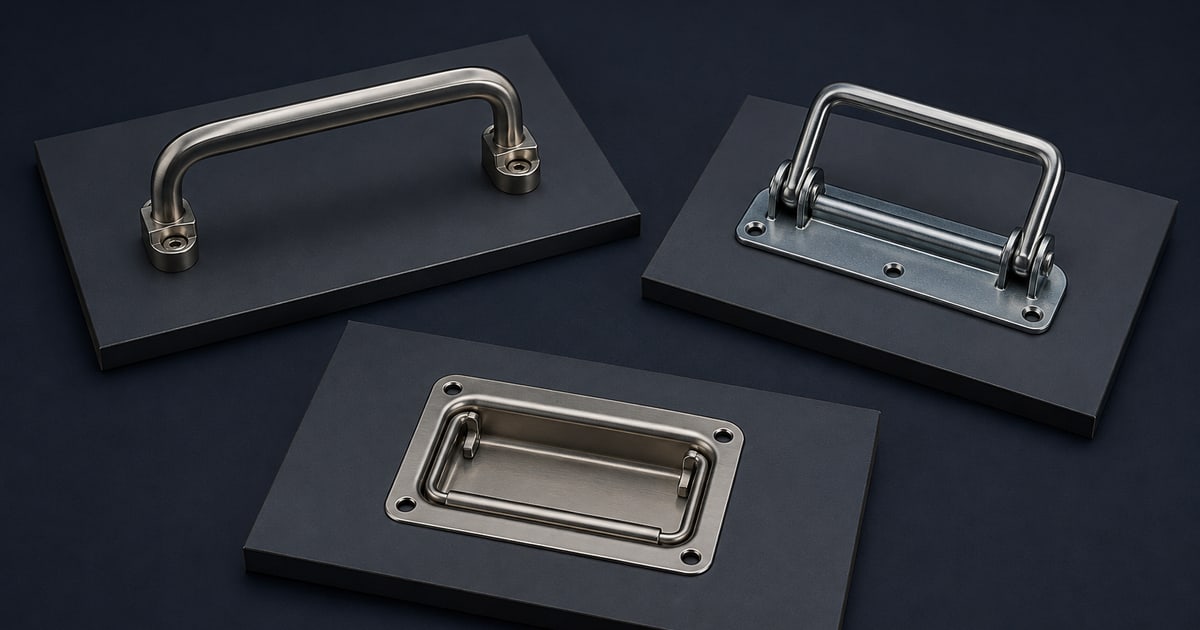
Surface-mounted bar, wire, U-shaped or similar handles for direct push-and-pull access.
Fold toward the mounting surface when not in use. Return, retention and anti-rattle behavior depend on the exact design.
Place much of the grip within a panel cutout to reduce projection. Cutout geometry and rear clearance are key inputs.
Support lifting or transporting only when the exact handle, attachment, mounting panel and complete assembly are evaluated for that load case.
May be produced to a drawing when grip, hole centers, thread or appearance cannot be met by a standard configuration.
T-handles, swinghandles and similar parts that operate a latch belong to the closure system and must be specified with it.
Detailed buyer guides
Open the specific operating family that matches the application. Each page includes a comparison, installed-interface map, RFQ template and source-linked evidence boundaries.
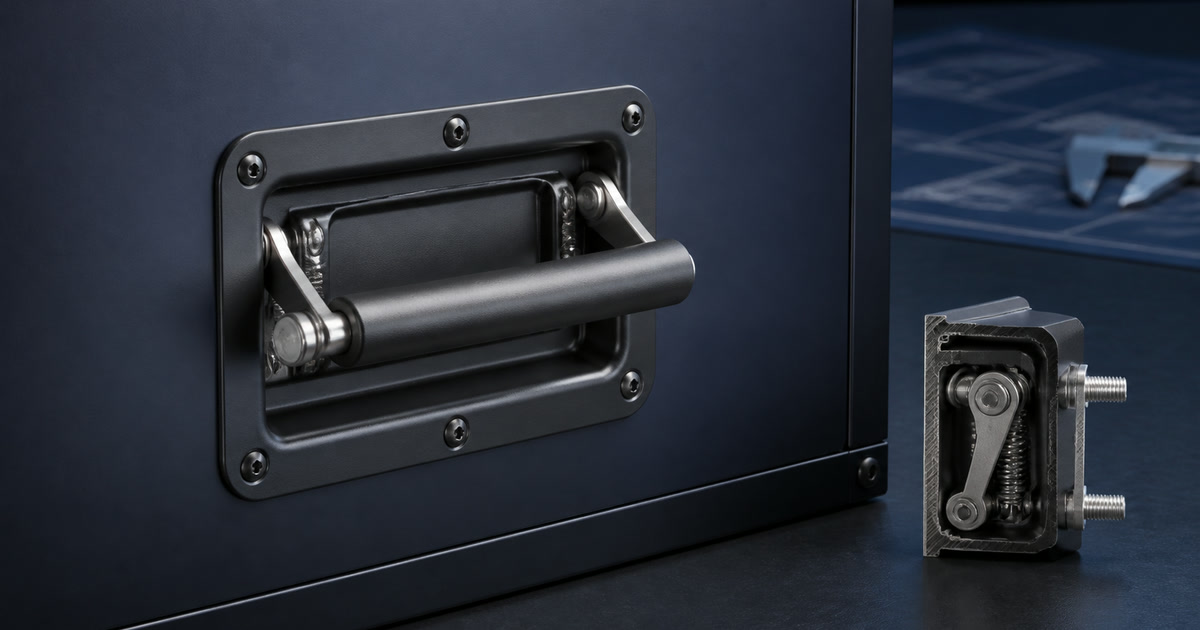
Choose low-profile handles by cutout, stowed envelope, return action, load path, panel reinforcement and service environment.
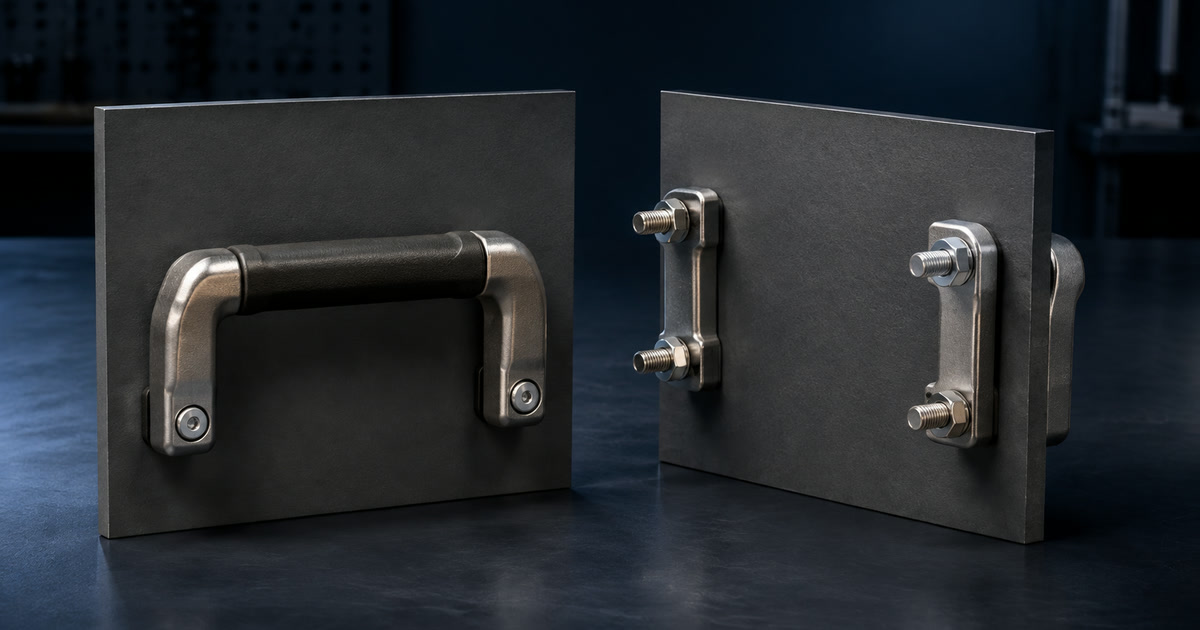
Specify fixed U-, arched, tubular and bar handles by hole centres, grip clearance, mounting, panel and load direction.
Option comparison
A fixed handle keeps a permanent grip and projection; a folding handle reduces projection after use; a recessed handle places the grip within a panel cutout. Compare user action, hand clearance, deployed and stored envelope, mounting interface, available rear depth and complete load path before choosing.
| Decision factor | Fixed handle | Folding handle | Recessed handle |
|---|---|---|---|
| Envelope | Constant exterior projection. | Projects in use and folds toward the panel. | Uses panel depth to keep the exterior nearly flush. |
| Interface focus | Hole centers, rear access and hand clearance. | Pivot, return behavior, stops, pinch space and hole pattern. | Cutout, cup depth, edge condition, drainage or sealing and rear clearance. |
| Load review | Handle, fasteners and panel. | Deployed handle position plus pivots, fasteners and panel. | Recessed body, attachment, cutout reinforcement and enclosure. |
| Common mistake | Selecting by overall length. | Ignoring stored position or pinch clearance. | Ignoring the required cutout and internal interference. |
Selection factors
A handle for opening a cabinet is not automatically suitable for carrying the entire enclosure. Define the action and load path first.
| Factor | What to specify |
|---|---|
| Intended action | State whether the user will pull, push, lift, carry or actuate another mechanism. |
| Mounting interface | Provide hole centers, cutout, thread or stud details, fastener access and panel thickness. |
| Grip envelope | Define grip length, hand or glove clearance, projection, edge clearance and available rear space. |
| Rest position | Choose fixed, folding, spring-return, flush or recessed behavior and identify nearby obstructions. |
| Load case | State force magnitude and direction, use frequency, attachment details and the requested test method. |
| Material and environment | Specify material, finish, grip surface and relevant temperature, chemical, UV or corrosion exposure. |
Practical answer
State the complete equipment mass, handle count and orientation, load direction, lifting or carrying method and any dynamic or safety factor required by the responsible engineer. A catalog handle rating is not an installed-system rating; the fasteners, panel, reinforcement and enclosure load path also require verification.
Application decision
The word “handle” does not define the load path. State what the user does, then verify the handle, fasteners, panel and enclosure together.
| Application need | RFQ direction |
|---|---|
| Open or pull a panel | Specify grip, hand clearance, projection, hole centers, mounting access and expected operating force for a pull handle. |
| Carry an equipment case | Define complete equipment mass, handle count, orientation, dynamic handling conditions and the structural load path. |
| Reduce projection after use | Compare folding return behavior, deployed clearance, pinch considerations and stop geometry. |
| Keep the exterior nearly flush | Review recessed cutout geometry, cup depth, edge condition, drain or sealing needs and rear clearance. |
| Actuate a latch system | Submit the handle, shaft, cam, rods, guides and keepers as one closure-system requirement. |
| Replace an existing handle | Provide hole centers, thread, fastener access, grip envelope, projection and installed photographs—not only overall length. |
Installed interface
Trace the applied force through every connection. The weakest attachment or panel detail may govern the installed result.
Pulling, carrying, lifting, folding or actuating another mechanism.
Grip length, diameter or section, finger clearance, glove use and projection limits.
Material, finish, return behavior, stop geometry and exact part load data where required.
Hole centers, thread, stud length, rear access, tightening and recessed-panel preparation.
Thickness, reinforcement, complete mass, load direction and dynamic handling condition.
Typical use
The same hardware family can behave differently across enclosure types. Include the installed context, not only the component name.
Pulling and closing access doors where grip clearance and nearby obstructions are defined.
Low-profile or recessed grips fitted to the panel thickness and available rear space.
Access and positioning handles coordinated with the enclosure layout and mounting structure.
Carrying applications that require the complete handle-to-case load path to be checked.
Technical boundaries
Use measurable requirements and identify the requested test basis. Product-family names alone do not establish performance or certification.
Buyer questions
Use these answers to prepare a more specific sourcing request.
Not automatically. A recessed handle introduces a cutout, attachment points and possible seal or drainage details. Ask whether evidence covers the exact handle, panel preparation, gasket, fasteners, orientation and completed enclosure configuration.
There is no universal value: define the users, gloves, grip direction and nearby obstructions, then check the candidate drawing or a sample. The pull-handle grip envelope lists what to specify.
Yes, but hole centers alone are not enough; send the measurements needed to replace a pull handle.
Submit it as enclosure latch and lock hardware because its shaft, cam, rods or other closure components must be reviewed as one system.
Technical reference basis
This category guide supports RFQ preparation. It does not replace an exact supplier drawing, model data, test report, applicable standard or responsible engineering approval.
Original manufacturer taxonomy illustrating front/rear mounting, hole centers, material and handle-family differences.
Part-specific literature illustrating why mounting and performance statements must remain tied to an exact model.
Private sourcing review
Have a drawing, photo or reference part?
Send the interface and commercial requirements for a focused Taiwan sourcing review.