Position-control lid hardware

Torque Hinges and Lid Stays for Enclosure Lids and Doors

Torque hinges—also sold as friction, position-control or constant-torque hinges—hold a lid or door at whatever angle the user leaves it. This guide shows how to calculate the torque a lid needs, how torque direction and service life change the choice, and when a lid stay or gas spring is the better support.

By ·

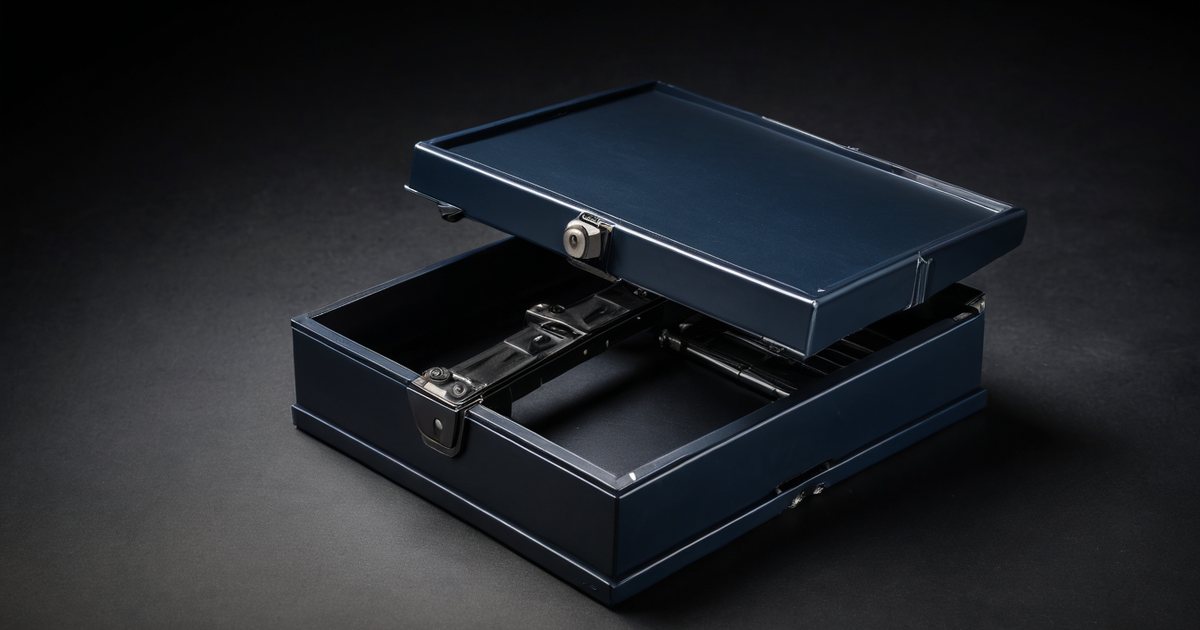
Generic dark sheet-metal case with its lid raised on rear hinges and a lid support mechanism visible inside
Editorial illustration of an enclosure lid held open. It is not a supplier model or statement of availability.

Direct answer

What is a torque hinge, and when should a lid use one?

A torque hinge—also called a friction or position-control hinge—creates a controlled resistance to rotation so a lid or door stays at any angle. Use one when the lid must stop anywhere in its travel. It holds only while its lowest torque, across tolerance and rated life, at least equals the lid’s gravity moment, and excess torque makes the lid heavy and stiff to operate.

  • Calculate the lid moment from weight and horizontal distance to the center of gravity.
  • Compare that moment with the lowest torque the hinges keep across tolerance and life.
  • Set the torque direction so the lid holds without becoming too hard to lift.
Sources for this answer:

Evidence at a glance

What Torque, Load and Gas-Spring Ratings Do Not Guarantee

Does a hinge’s nominal torque hold the lid for its whole service life?

Not necessarily. Southco rates several E6 and ST hinges at 20,000 cycles within ±20% of the static torque specification, so a hinge chosen at nominal torque can end below the lid moment. Takigen’s selection rule likewise compares the lid moment with total lower-limit torque.

Boundary: Both statements are specific to those products; neither gives torque at temperature extremes, after vibration exposure or beyond the rated cycle count.

Buyer action: State the per-hinge lid moment and the cycle target, then require the lowest torque across tolerance and rated life to exceed that moment, with test data.

Is a torque hinge’s torque rating also its load rating?

No. The torque rating describes resistance to rotation; the hinge must also carry the lid’s weight and handling forces through its body, leaves and fasteners. Southco lists radial and axial static loads separately from torque, for example 155 N maximum static radial load for a medium E6 hinge.

Boundary: Published static loads apply to the exact model, load direction and mounting; they are not fatigue, shock or completed-lid ratings.

Buyer action: Give lid mass, hinge spacing, panel thickness and handling or wind loads, and request radial, axial and torque data for the exact hinge; see how many hinges an enclosure door needs.

Does a gas spring lift a lid with the same force in cold weather?

No. SUSPA states that between −30 °C and +80 °C a gas spring’s extension force changes by about 3.5% per 10 °C, and that gas springs lose force with age as nitrogen gradually escapes.

Boundary: These figures describe SUSPA gas springs; other manufacturers publish their own temperature coefficients, service lives and installation rules.

Buyer action: State the minimum and maximum operating temperatures and the mounting orientation, and require enough spring force at the coldest condition and at end of life.

Primary sources:

Option comparison

Torque hinge vs gas spring: which should hold an enclosure lid?

Choose torque hinges when the lid must stop at any angle and the extra lifting force is acceptable; Sugatsune gives that force as hinge torque plus lid moment, divided by the handle distance. Choose a gas spring when the lid needs lifting help, then specify its force at the coldest temperature, rod-down mounting and force loss with age.

Torque hinge vs gas spring: which should hold an enclosure lid?
Decision factorTorque hingeGas spring
Holding behaviorHolds wherever its lowest torque exceeds the lid moment.Extends to assist opening; a lockable type can lock its rod in any position.
Lifting effort(Hinge torque + lid moment) ÷ distance to the handle.Spring force offsets part of the lid moment, depending on force and mounting points.
TemperatureAsk for the rated range and the torque at both limits.SUSPA: force changes about 3.5% per 10 °C between −30 and +80 °C.
Change with useSouthco E6: within ±20% of static torque over 20,000 cycles.Force falls with age as nitrogen escapes; SUSPA cites 10,000–100,000 double strokes of life.
Decision basis: TW RFQ comparison drawn from cited Southco, Takigen, Sugatsune and SUSPA data. Figures belong to those products; request the exact candidate’s torque, force and life data.

Configurations to compare

Symmetric Constant-Torque Hinge

Resists equally in both directions, so the lid holds wherever the lowest torque exceeds its moment, but lifting works against torque and weight together.

Asymmetric-Torque Hinge

Lists different torque by direction—one Southco medium E6 gives 1.4 N·m forward and 0.8 N·m reverse—so the higher value can face the lid’s fall.

One-Way Torque Hinge

Resists in one direction with minimal resistance in the other; Southco describes it for lids that must open easily and stay open.

Detent Hinge

Resists movement at specific angles so the lid stays open there; list each hold angle instead of expecting continuous position control.

Friction or Damper Lid Stay

A separate stay sized from the same lid moment: a friction (torque) stay holds position, while a damper stay slows the lid rather than holding it.

Selection factors

Lid Moment, Torque Direction and Life Inputs for a Torque Hinge Quote

Torque Hinges & Lid Stays RFQ selection factors
FactorWhat to specify
Lid momentGive lid weight and the horizontal distance from hinge axis to center of gravity with the lid level, or a spring-scale reading taken at a stated distance.
Torque directionName the rotation, seen from a stated side, that needs the higher torque: usually closing for a lift-up lid and opening for a drop-down door. If the lid passes vertical, the moment reverses, so state the full range.
Margin ruleManufacturers differ: Takigen compares the moment with total lower-limit torque, while Southco suggests about 30% extra for feel as a starting point. State the rule you used and ask for minimum torque per hinge.
Cycle lifeState the opening cycles expected over the product’s life and ask what torque band the candidate holds across that count.
Radial and axial loadRequest load ratings separately from torque, and supply lid mass, hinge spacing and any handling or wind force.
MountingGive panel thickness at each leaf, through-hole or thread-stud preference, fastener type and any backing plate; one Southco model sizes screws as door thickness + 6 mm.
Effort and environmentState handle position, acceptable lifting and closing force, temperature range, wind, vibration and washdown exposure.

Installed interface

  1. 01

    Lid and payload

    Mass, center of gravity, attached equipment and handle distance from the hinge axis.

  2. 02

    Torque mechanism

    Symmetric, asymmetric, one-way, detent or adjustable torque, with its tolerance and life band.

  3. 03

    Leaves and fasteners

    Through-hole or thread-stud mounting, screw length, panel thickness and reinforcement.

  4. 04

    Hinge axis and spacing

    Common axis alignment, hinge count, spacing and full opening range.

  5. 05

    Service environment

    Temperature range, wind, vibration, washdown, corrosion and cycle target.

Practical answer

How do I calculate the torque a hinge needs to hold a lid?

Multiply the lid’s weight by the horizontal distance from the hinge axis to its center of gravity. That moment peaks when the center of gravity is level with the axis—for a thin lid, when the lid is horizontal—and shrinks as the lid rises, so size to that peak. Share it across the hinges or stays and compare it with their lowest torque, not the nominal value: Takigen selects on total lower-limit torque, while Southco suggests adding around 30% for feel as a starting point. Torque also moves with use; Southco rates several E6 hinges at 20,000 cycles within ±20% of static torque.

  1. Weigh the finished lid with everything attached and find its center of gravity.
  2. With the lid level, measure the horizontal distance from hinge axis to that point.
  3. Multiply weight (N) by that distance (m) to get the peak lid moment in N·m.
  4. Divide by the hinge count—see how many hinges an enclosure door needs—and compare with each hinge’s lowest rated torque.
  5. Apply the supplier’s margin for tolerance, life, wind and vibration, then verify on the actual lid.

Copy into your request

Torque Hinges & Lid Stays RFQ template

Lid weight and center-of-gravity location: [ ]
Horizontal distance from hinge axis to center of gravity: [ ]
Hinge axis orientation, opening range and hold angles: [ ]
Hinge or stay count and spacing: [ ]
Torque direction: symmetric, asymmetric or one-way: [ ]
Minimum torque per hinge and margin rule: [ ]
Cycle target and torque band over life: [ ]
Panel thickness, fasteners and reinforcement: [ ]
Temperature range, wind and vibration exposure: [ ]

Application decision

Torque Hinge, Detent, Stay or Gas Spring: Choosing by Lid Behavior

Torque Hinge, Detent, Stay or Gas Spring: Choosing by Lid Behavior
Application conditionRFQ direction
Lid must stop at any angleSpecify constant torque from the lid moment, hinge count and lowest torque across tolerance and life.
Lifting effort is too highCompare asymmetric or one-way torque, a handle farther from the axis, or gas-spring assistance.
Lid needs set open angles onlyEvaluate detent hinges and list each hold angle and the acceptable release effort.
Torque must be set after assemblySpecify adjustable torque whose maximum setting at least equals the lid moment, and say who sets it.
Wind, vibration or cold exposureAsk for a stiffer torque setting, state the temperature range and confirm the hold on the real lid.

Applications to describe in the RFQ

01

Control-Panel Covers

Covers over displays or controls that must stay at the angle a technician leaves them during adjustment.

02

Instrument and Analyzer Lids

Top-opening lids where cycle count, lifting effort and a clear working opening all need definition.

03

Outdoor Service Hatches

Wind, cold and vibration that raise the torque margin or make a gas spring worth comparing.

04

Mobile Equipment Covers

Shock and vibration that call for a stiffer torque setting and hold checks on the actual lid.

Buyer questions

Torque Hinges & Lid Stays FAQ

Answers without a listed source are TW RFQ editorial guidance, not an external standard or part-specific approval.

How can I measure the moment of an existing lid?

Hook a spring scale to the lid at a known distance from the hinge axis, lift the lid and note the maximum reading; distance × reading is the lid moment. Sugatsune’s example is 100 cm × 2.5 kg = 250 kgf·cm, or 24.5 N·m. The method helps when attached equipment makes the center of gravity hard to calculate.

Sources: Sugatsune
Why does a lid on torque hinges feel heavy to lift?

Lifting works against the hinge torque and the lid’s own moment together; Sugatsune gives the lifting force as (torque + lid moment) ÷ distance to the operating point. Because the torque must at least equal the lid moment, lifting from level takes at least twice the force of a free-swinging lid. Asymmetric or one-way torque, a handle farther from the axis or a gas spring reduces it.

Do torque hinges have to be ordered as handed pairs?

Some do. Southco lists its asymmetric and one-way E6 hinges under separate F and R part numbers, and requires every ST hinge assembly to include at least one Type A and one Type B hinge. Name the rotation that needs the higher torque from a stated viewing side, using the same convention as lift-off hinge handing.

Sources: Southco
When is a damper stay a better choice than a torque hinge?

When the lid only needs to close slowly rather than stop anywhere. Sugatsune sizes a damper so the lid’s maximum moment falls between the damper’s minimum and maximum torque, whereas a free-stop hinge or stay needs torque at or above that moment. Give the lid moment and the closing behavior you expect.

Sources: Sugatsune

Technical reference basis

Sources

What these buyer guides do not establish

Sources last checked: .

  • What is a friction/torque hinge?Southco (article published by AltEnergyMag)

    Manufacturer-authored article defining constant-torque, one-way and detent hinges and suggesting about 30% added to the calculated torque for feel as a starting point.

  • How to use the torque hinge selection toolTakigen

    Manufacturer guide stating that lid moment peaks with the center of gravity level with the axis, and selecting on total lower-limit torque.

  • E6 and ST constant-torque hinge catalog pagesSouthco

    Manufacturer catalog listing symmetric, asymmetric and one-way torque values, static loads, mounting notes and a 20,000-cycle ±20% torque rating.

  • The basics of center of gravity and momentSugatsune

    Manufacturer design note defining lid moment as horizontal distance to the center of gravity times mass, with a spring-scale method.

  • What is operating force?Sugatsune

    Manufacturer design note giving lifting and pushing force from hinge torque, lid moment and distance to the operating point.

  • Gas spring FAQSUSPA

    Manufacturer FAQ on gas-spring force change with temperature, rod-down installation, force loss with age and service life.

Private sourcing review

Have a drawing, photo or reference part?

Send the interface and commercial requirements for a focused Taiwan sourcing review.

Request a Quote